
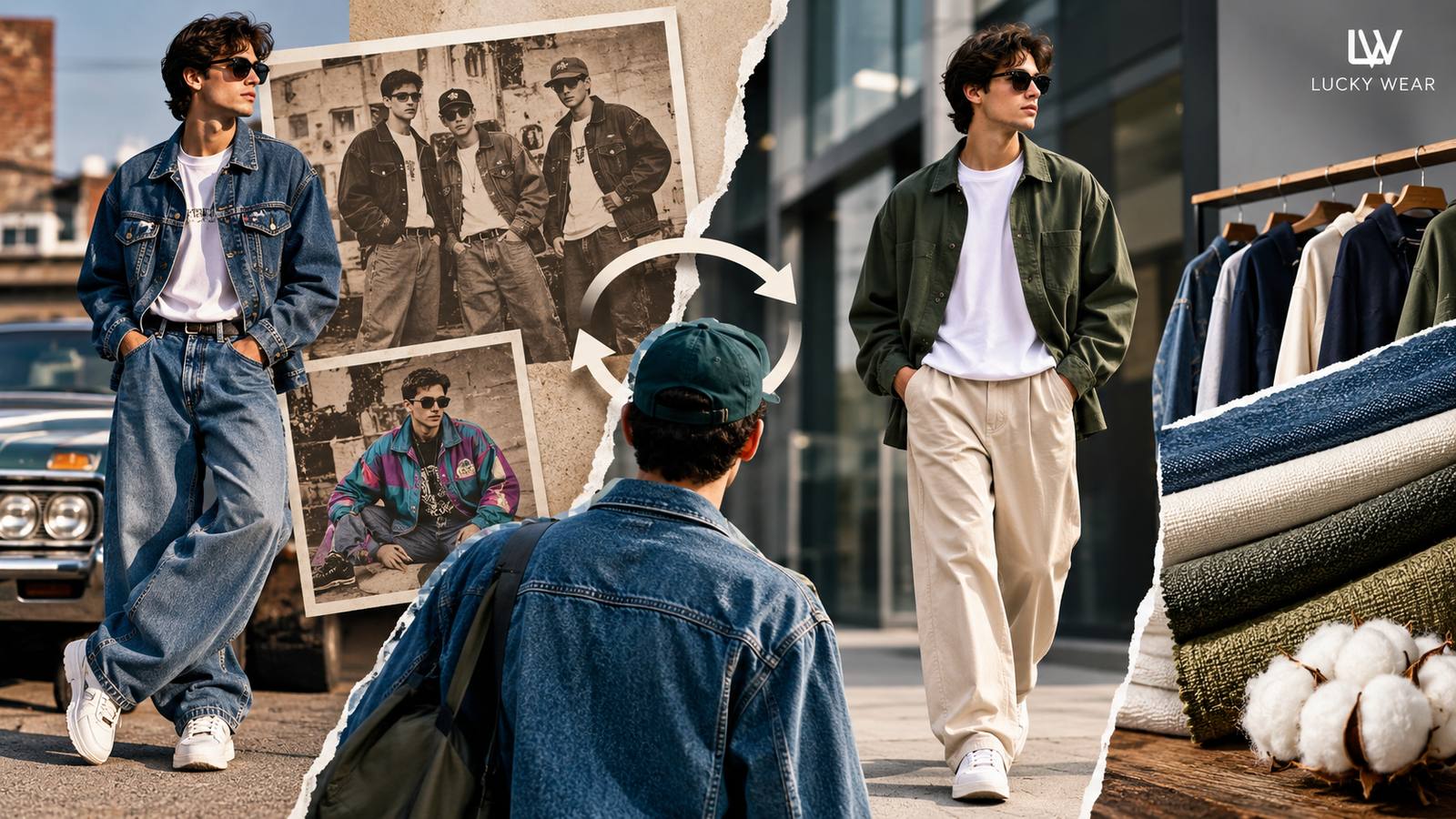
Have you ever looked at old family albums or photos of your parents from the 1990s and noticed that their outfits look almost identical to today’s trending street style? Oversized denim jackets, wide-leg trousers, chunky sneakers, retro windbreakers, and vintage knitwear are dominating clothing store displays once again.
Fashion often feels like an endless loop, where older aesthetics continuously return to the spotlight. For any guy trying to dress well, this constant recycling of clothing styles can feel confusing. You might wonder if it is even worth buying new clothes when everything seems to go out of style, only to return a few years later.
Understanding why fashion trends keep coming back helps you make smarter purchasing decisions, build a highly versatile personal wardrobe, and maintain effortless everyday style without wasting money on short-lived gimmicks.
The 20-Year Fashion Cycle and the Power of Nostalgia
The primary engine behind returning clothing trends is the classic 20-year fashion cycle. It takes approximately two decades for a specific aesthetic to move from peak popularity to outdated, then to vintage, and finally back to a major mainstream trend.
This timeline is not an accident—it directly aligns with human generation shifts and changing purchasing power:
- Earning Power and Nostalgia: As young adults enter their late twenties and thirties, they gain independent disposable income. Naturally, they look back at the pop culture, television shows, video games, and clothing styles of their youth with warm nostalgia. Recreating those looks brings back comforting memories of simpler times.
- New Designers Seeking Inspiration: At the same time, creative directors and fashion designers in their late twenties and thirties begin leading major clothing brands. They draw inspiration directly from the aesthetic world they experienced while growing up, reinterpreting those childhood influences on modern runways.
When consumer demand for nostalgic aesthetics aligns with designers creating nostalgic clothing, a full-blown fashion revival takes place across the entire retail market.
Pop Culture, Streaming Media, and Music Revivals
Movies, viral television series, streaming shows, and music videos act as massive visual catalysts for reviving retro clothing styles overnight.
In the past, fashion trends spread slowly through print magazines and local retail displays. Today, a single vintage-inspired streaming show can reach tens of millions of viewers globally within a single weekend.
When a period drama, 80s thriller, or 90s-themed sitcom becomes a massive hit, audiences naturally want to recreate the characters’ outfits. This rapid media exposure introduces vintage silhouettes, unique color palettes, and retro patterns to a brand-new generation of young shoppers who missed the trend the first time around.
Trend Fatigue and the Pendulum Effect
Fashion operates like a swinging pendulum. When a specific look or fit dominates the fashion industry for too long, consumers eventually experience trend fatigue and naturally lean toward the exact opposite style.
To understand how trend fatigue works, consider the evolution of men’s pant silhouettes over the last two decades:
- The Skinny Era: For years, ultra-skinny jeans and heavily tapered trousers dominated men’s clothing stores. Every brand produced slim, body-hugging fits.
- The Fatigue: Eventually, men grew tired of restricted movement, tight fits, and uncomfortable fabrics. The market became completely oversaturated with skinny cuts.
- The Swing Back: The fashion pendulum swung aggressively in the opposite direction, bringing back the relaxed, wide-leg, and straight-fit trousers popular in the 1990s.
The same pendulum effect happens with colors, patterns, and outerwear cuts. Minimalist plain neutrals eventually give way to bold retro prints, and tight cropped blazers give way to relaxed, boxy jackets. When one extreme becomes oversaturated, the market seeks balance by bringing back proven classic alternatives from past decades.
The Natural Limits of Human Clothing Design
Beyond psychology and media, there is a simple structural reality to clothing: human clothing is designed around basic geometric shapes that fit the human body. Because there are only so many practical ways to construct a shirt, pair of trousers, or jacket, basic garment structures cannot change drastically without becoming unwearable costumes.
Fashion designers are constantly tasked with creating “new” collections every season. Since they cannot invent an entirely new shape for human bodies, they modify smaller design details:
- Altering collar widths and shoulder seam drops
- Adjusting pocket placements and hem lengths
- Changing fabric weights, textures, and weave density
- Experimenting with looseness versus tightness through the waist
Once every possible combination of these minor details has been explored, cycling back to timeless, established cuts from earlier decades is completely natural and unavoidable for the clothing industry.
How Vintage Trends Are Upgraded for Modern Men
When older clothing styles return, they are rarely exact 1-to-1 copies of the originals. Clothing manufacturers re-engineer vintage garments using modern technology and contemporary tailoring standards:
- Superior Fabric Engineering: Original vintage garments were often heavy, stiff, or made with low-grade synthetic materials. Today, returned trends are recreated using soft, breathable, pre-shrunk cotton blends from quality-focused brands like Lucky Wear.
- Refined Modern Tailoring: A modern “relaxed fit” pant maintains the loose, comfortable feel of a 90s pant, but it is tailored cleanly around the waist and seat so it does not look saggy or unkempt.
- Wearable Color Palettes: Loud, neon vintage patterns are often adapted into versatile neutral shades like navy blue, olive green, beige, and charcoal gray, making them much easier to wear in daily life.
How to Wear Returning Trends Effortlessly
To wear returning fashion trends without looking like you are wearing an outdated costume, the golden rule is visual balance. Avoid wearing a full vintage outfit from head to toe.
Instead, pair a single retro trend piece with clean, high-quality core basics from Lucky Wear:
- Combine an oversized vintage-style denim jacket with a crisp, plain white cotton t-shirt and slim dark jeans.
- Pair relaxed wide-leg chinos with a well-fitted, solid collared shirt.
- Wear chunky retro sneakers with simple, neutral everyday trousers and a clean crew-neck tee.
By anchoring trendy retro pieces with high-quality, timeless basics, your overall outfit remains sharp, grounded, and modern.
Frequently Asked Questions (FAQs)
1. Which decade’s fashion trend is currently returning the most?
Late-1990s and early-2000s (Y2K) streetwear trends are currently leading the market. Key pieces include relaxed-fit trousers, utility cargo pants, boxy graphic tees, oversized hoodies, and chunky athletic sneakers.
2. Do fast fashion brands cause trends to return faster?
Yes. Social media algorithms, digital trends, and rapid manufacturing have created “micro-trends.” This has accelerated the traditional 20-year cycle, causing some niche styles to return and disappear in as little as three to five years.
3. What clothing items never go out of style?
Timeless wardrobe essentials never fade out of style regardless of cycling trends. Plain cotton crew-neck t-shirts, well-fitted dark denim jeans, neutral chino pants, casual button-down Oxford shirts, and clean leather sneakers remain stylish across every decade.
4. How can I build a timeless wardrobe on a budget?
Follow the 80/20 Rule. Invest 80% of your clothing budget in high-quality core basics from trusted brands like Lucky Wear that last for years without losing shape, and spend only 20% on fun, temporary viral trends.
5. Why do old fashion trends feel more durable than modern clothes?
In past decades, clothing was produced using thicker, natural fabrics and stronger construction techniques. Modern fast fashion often uses thin synthetic blends to lower costs, which is why choosing quality cotton essentials is crucial today.
6. How do I know if a returning trend will suit my body type?
Focus on proportion rather than hype. If a returning trend (like wide-leg pants or boxy jackets) flatters your body shape and feels comfortable, adopt it. If it hides your proportions or feels awkward, stick to classic tailored cuts.
Conclusion
Fashion trends keep coming back because nostalgia, pop culture, media, and design limits naturally refresh our style choices every two decades. While viral trends offer fun variety, relying solely on short-lived hype can clutter your closet and waste your hard-earned money.
The smartest fashion approach is to build a rock-solid foundation using durable, comfortable, pre-shrunk cotton basics from Lucky Wear. Once your core wardrobe is established, you can selectively incorporate returning retro trends to keep your personal style fresh, confident, and timeless!
